

Your Potable Water System

Your Potable Water System
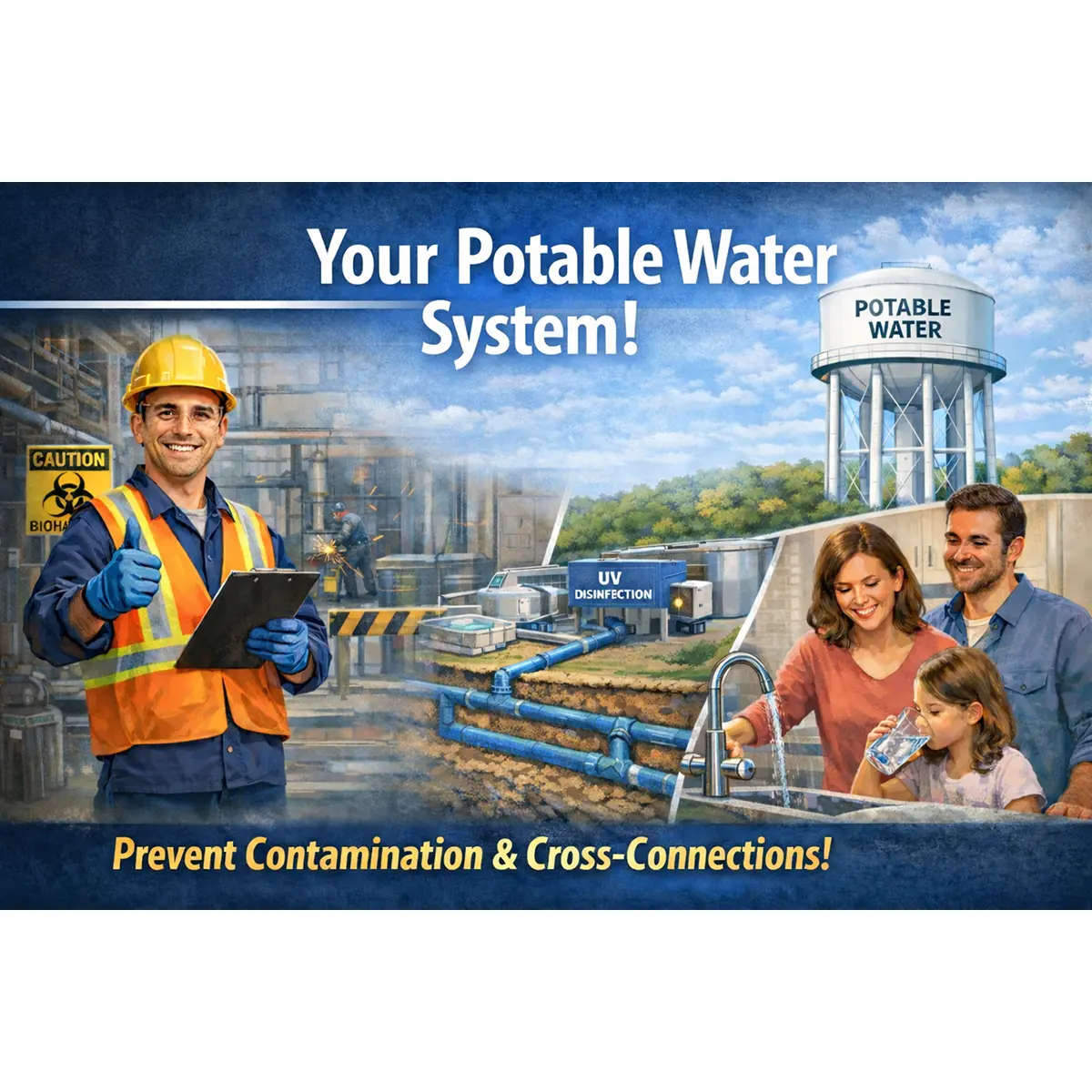
The Safe Drinking Water Act (SDWA) was passed by Congress in 1974 to protect public health by regulating the nation’s public drinking water supply. The SDWA was amended in 1986 and 1996 and requires many actions to protect drinking water and its sources. The SDWA authorizes the United States Environmental Protection Agency (US EPA) to set national health-based standards for drinking water to protect against both naturally occurring and man-made contaminants that may be found in drinking water. US EPA, states, and water system operators have responsibilities to make sure that these standards are met. In Louisiana, the Louisiana Department of Health (LDH) administers drinking water rules as codified in Louisiana Administrative Code (LAC) 51, Part XII - Water Supplies.
Water Systems
LAC 51, Part XII defines a public water system as: a system for the provision to the public of water for potable water purposes through pipes or other constructed conveyances, if such system has at least 15 service connections or regularly serves an average of at least 25 individuals daily at least 60 days out of the year. LDH considers systems which do not meet these requirements as private water systems. LAC 51 Part XII also applies to private water systems.
LAC 51 Part XII §309 requires that all public water systems be under the supervision and control of a duly certified operator. Certified operators must earn 8 hours of continuing education credits every two years.
Public water systems may not construct, operate or modify the capacity, hydraulic conditions, treatment processes or the quality of finished water without a permit from the state health officer. Detailed plans and specifications for the installation for which a permit is requested shall be submitted by the Engineer of Record or the person responsible for the charge of a municipally owned public water supply or by the owner of a privately owned public water supply.
Cross-connection Control
In 2016, LDH adopted the International Plumbing Code (IPC) as amended in LAC 17, Part I, §111. LAC 17, Part I, §111 amends a requirement to color code potable and non-potable water pipes when non-potable water is present for certain industrial facilities listed in R.S. 40:4.12. The exemption requires certain industrial facilities to have a cross-connection control survey performed by a certified person meeting the requirements of American Society of Inspectors of Plumbing and Sanitary Engineers (ASSE) 5120 every five years. The exemption also requires the development of a potable water distribution identification plan (PWDIP) satisfying the statute requirements. The exemption to the color-coding requirement is only applicable to facilities with the following 1997 National America Industrial Classification System (NAICS) Standard Industrial Classification (SIC) codes:
- 22111 electric power generation.
- 3221 pulp, paper, and paperboard mills.
- 324 petroleum and coal products manufacturing.
- 325 chemical manufacturing.
- 326 plastics and rubber products manufacturing.
- 331 primary metal manufacturing.
- 211 oil and gas extraction.
- 486 pipeline transportation.
- 213111 drilling oil and gas wells.
- 213112 support activities for oil and gas operations.
How CK Associates Can Help
CK Associates (CK) can provide support in evaluating, maintaining, and documenting compliance with drinking water systems. This support includes:
- Conducting cross-connection control surveys and backflow preventer inspections
- Developing/updating potable water distribution identification plans
- Evaluating drinking water quality for compliance with disinfectants/disinfection byproduct, lead and copper, and total coliform requirements
- Sampling water supply sources for per- and polyfluoroalkyl substances (PFAS)